
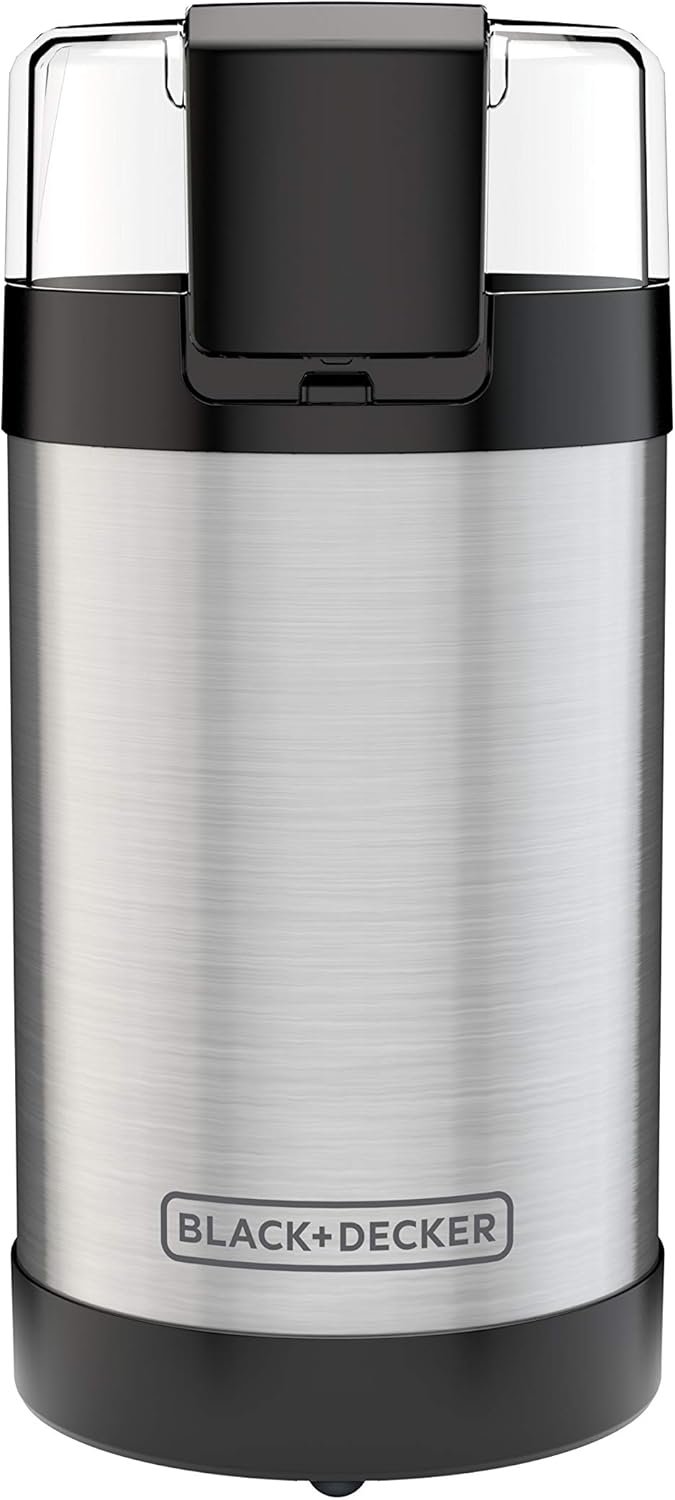
Kinetic Extraction: Black & Decker Smart Grind Audit
Pre-ground coffee is a flavor compromise. The moment a bean is fractured, volatile oils begin to oxidize, resulting in a flat, latency-heavy brew. To maximize extraction telemetry, you need immediate, on-demand grinding. For the Canadian kitchen managing both morning coffee rituals and evening spice-blending, having a dedicated multi-substrate processor is a mechanical necessity. The Black & Decker Smart Grind professionalizes this process through a high-velocity stainless steel chassis. It just works.


Mechanical Telemetry: Stainless Blade Logic
The operative success of a blade grinder depends entirely on the hardness and angle of its cutting hardware. This unit utilizes a high-durability stainless steel blade system engineered for a 30% improvement in grinding efficiency compared to standard iterations. This raw kinetic energy isn’t just for coffee beans; it effectively sequestrates dry herbs, tough spices (like peppercorns or cumin), grains, and nuts. The sheer velocity ensures that the substrate is pulverized quickly, minimizing the heat transfer that can burn delicate coffee oils.


Volumetric Capacity: 12-Cup Output
Batch processing is a key efficiency metric for busy mornings. The internal bowl logic accommodates enough beans to brew up to 12 cups of coffee (roughly equivalent to standard 5 oz cup measurements) in a single operational cycle. Despite this high capacity, Black & Decker has integrated acoustic damping engineering, resulting in a system that is 25% quieter than traditional grinders. This acoustic sequestration ensures your early-morning grind doesn’t wake the entire household.

Interface Logic: One-Touch Safety Handshake
Simplicity is engineered into the control interface. There are no complex dials; activation relies on a single-touch push-button mechanism. Crucially, the unit features a mechanical safety handshake: the blades will absolutely not engage unless the lid is securely locked into its coordinates. This prevents accidental asset spills and protects the operator’s fingers during use. Non-slip rubber feet provide additional traction, preventing the chassis from “walking” across your countertop during high-torque processing.
Engineering Pros
- Hocheffiziente Multi-Substrate Logic handles beans, spices, and grains easily.
- Volumetric capacity supports up to 12 cups of coffee per grinding cycle.
- Acoustic sequestration makes it 25% quieter than standard blade chassis.
- Mechanical safety handshake prevents blade activation without the lid.
- Low-latency operation via intuitive one-touch push-button control.
Operational Cons
- Precision Limit: Lacks adjustable burr settings; coarseness relies entirely on visual timing.
- Maintenance Friction: The grinding bowl is not removable, making wet-cleaning a cumbersome task.
- Power Latenz: Requires a corded AC connection, limiting deployment away from the kitchen counter.
Consumer Sentiment (Data Analysis)
Aggregated user telemetry across major retail hubs identifies this grinder as a “budget workhorse.” Buyers frequently highlight its dual-purpose utility, noting that many users buy two—one dedicated to coffee and one exclusively for spices to avoid cross-contamination. While coffee purists correctly point out that blade grinders can produce an inconsistent grind size compared to expensive burr models, the consensus remains that the speed, reliability, and low noise footprint provide exceptional value for standard drip-coffee drinkers and home chefs.
Technical Specifications
| Chassis Capacity | Up to 12 Cups (approx. 5 oz per cup) |
| Blade Telemetry | High-Durability Stainless Steel |
| Acoustic Metric | 25% Noise Reduction Architecture |
| Control Interface | One-Touch Pulse Button Logic |
| Safety Protocol | Lid-Lock Engagement Requirement |
| Target Application | Coffee Beans, Spices, Nuts, & Dry Herbs |