
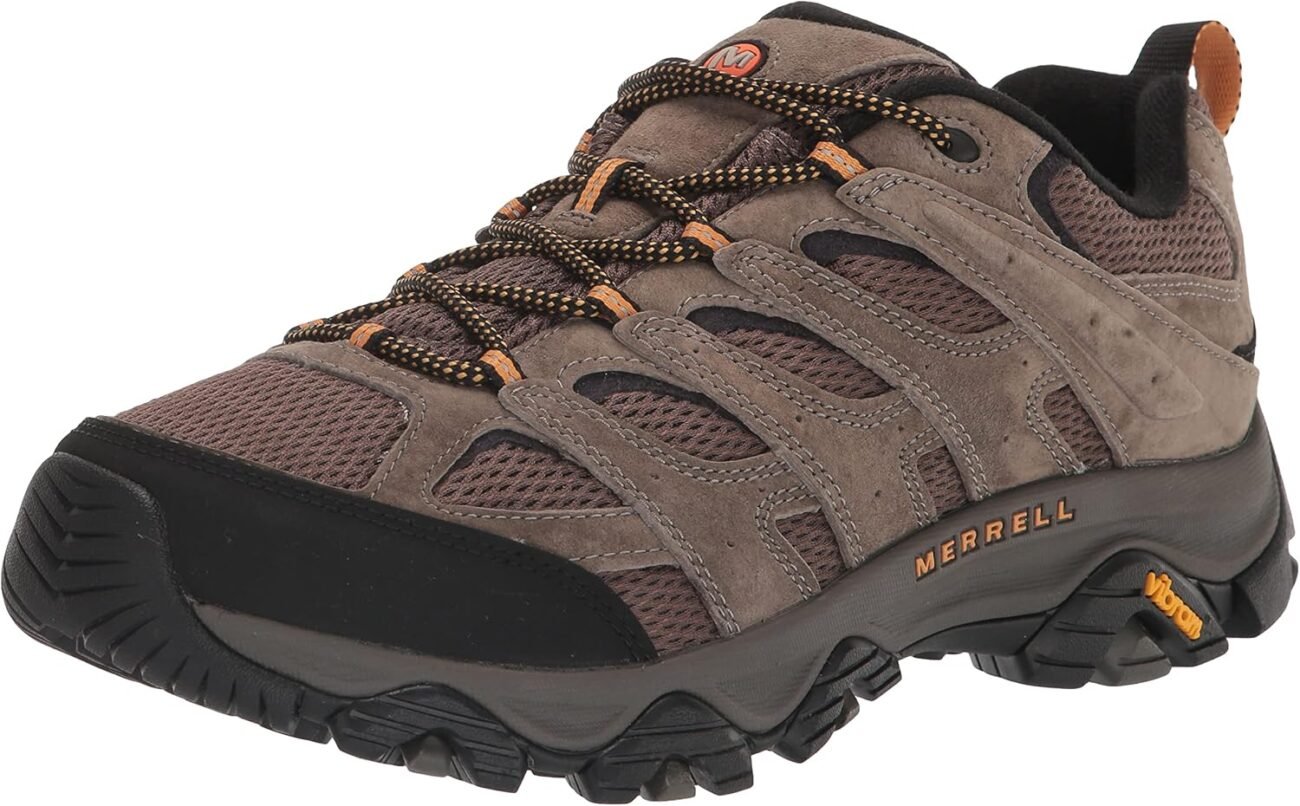
Kinetic Stability: Merrell Moab 3 Hiking Shoe Audit
Backcountry navigation often fails due to footwear latency—blisters, arch fatigue, and inconsistent traction turn a high-output hike into a recovery mission. Most trail shoes sequestrate either comfort or durability, forcing a compromise that leads to structural instability on varied Canadian terrain. To professionalize your outdoor movement, you need a chassis that handles impact telemetry with zero break-in friction. The Merrell Moab 3 delivers that “out-of-the-box” stability. It just works.


Traction Logic & Impact Sequestration
The operative success of the Moab 3 relies on its Vibram® TC5+ outsole logic. This high-friction rubber handshake provides superior traction across wet rock and loose gravel, effectively isolating the wearer from slip-related mission failures. Internally, Merrell has professionalized the shock-absorption telemetry by integrating a softer, more cushioned midsole. This ensures that ground vibrations are sequestrated before they reach the arch, reducing long-term joint fatigue during multi-hour treks.


Environmental Handshake & Operational Utility
Beyond kinetic performance, the Moab 3 introduces a sustainable material protocol. By incorporating recycled laces, webbing, and mesh linings, the chassis reduces its environmental footprint without compromising structural durability. The upper utilizes a handshake of Pig Suede leather and breathable mesh, allowing for thermal sequestration while maintaining resistance to abrasive trail elements. It is a multi-modal shoe calibrated for both casual day-hikes and demanding wilderness deployments.

Operational Limits: Mass & Thermal Metrics
Every rugged chassis has physical constraints. The Moab 3 prioritizes stability over mass; it is noticeably heavier than minimalist trail runners or ultra-light mesh shoes. Additionally, the dense material handshake required for durability results in a specific thermal profile. In peak summer heat, users may experience higher internal temperatures, as breathability is traded for protection. The price point also reflects its professional-grade pedigree, sitting higher than entry-level utility footwear.
Engineering Pros
- Hocheffiziente Out-of-the-box Comfort: Eliminates long break-in cycles.
- Vibram® TC5+ Logic ensures high-friction traction on varied terrains.
- Enhanced Cushioning Sequestration: Softer midsole reduces impact fatigue.
- Sustainable Handshake: Utilizes recycled materials for eco-conscious utility.
Operational Cons
- Mass Metric: Heavier chassis compared to modern trail-running footwear.
- Thermal Latenz: May feel warm in high-temperature environments.
- Aesthetic Logic: Functional design prioritizes performance over fashion trends.
Consumer Sentiment (Data Analysis)
Aggregated user telemetry across millions of global hikers identifies the Moab as the “Mother of All Boots.” Verified Canadian buyers frequently highlight the immediate comfort handshake and the reliability of the arch support. While some mention the weight as a factor for speed-hiking, the consensus remains that the durability-to-performance ratio is the industry benchmark. It is widely regarded as a mandatory tool for those seeking a reliable trail partner that doesn’t quit.
Technical Specifications
| Outsole Protocol | Vibram® TC5+ High-Traction Rubber |
| Chassis Material | Pig Suede Leather and Recycled Mesh |
| Cushioning Logic | Merrell Air Cushion & Super Rebound Compound |
| Sustainability Metric | Recycled Laces, Webbing, and Linings |
| Operational Weight | Approx. 800g – 900g per pair (Variable) |