
Thermal Redundancy: Single-Burner Electric Cooktop Audit
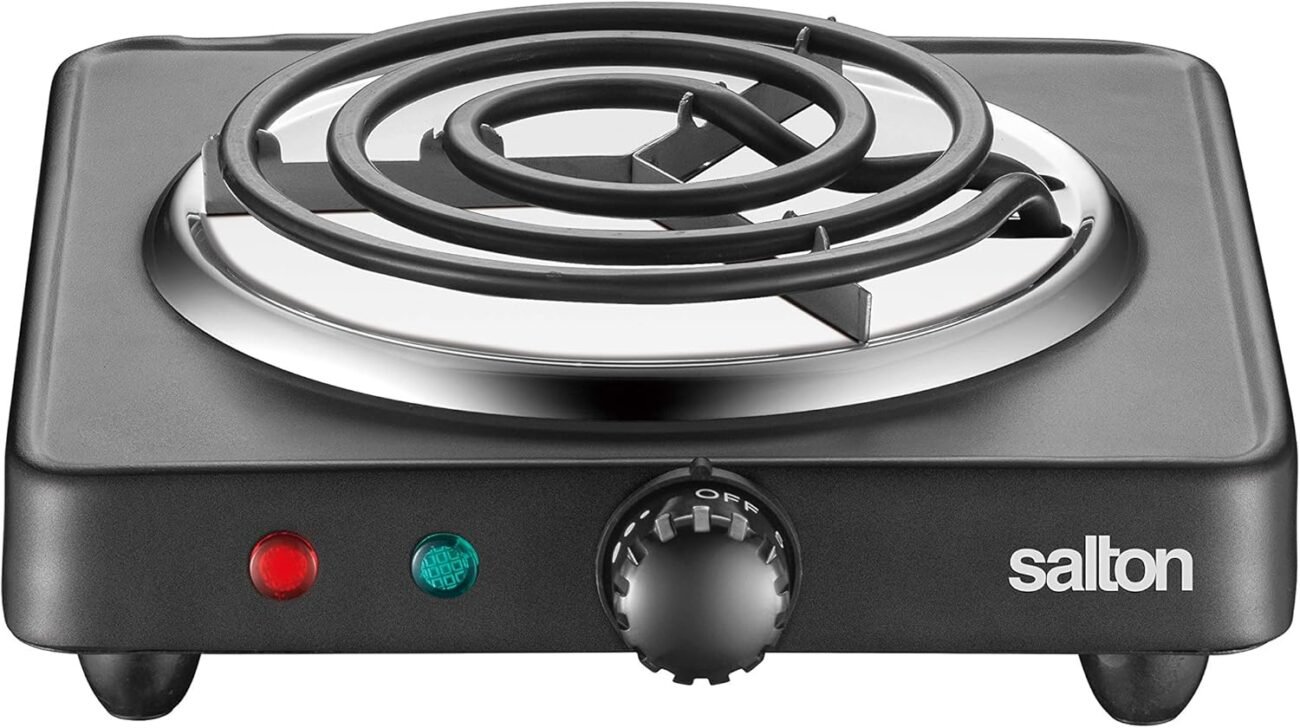
Standard kitchen ranges are static. If you’re managing a dorm room, a small cottage, or an RV, a full-sized stove is a spatial impossibility. Even in a home kitchen, “culinary downtime” during a stove failure or a holiday dinner can be a major mission bottleneck. You need a mobile heat source that doesn’t care about induction compatibility or fancy software. This Single-Burner Electric Cooktop provides 1000W of raw thermal transfer in a compact chassis. It just works.


Thermal Telemetry: 1000W Coil Performance
The operative success of this cooktop relies on its 1000-watt coil-based element. Unlike induction hubs that require specific magnetic telemetry in your pans, this coil element facilitates a thermal handshake with any conductive material—cast iron, aluminum, or stainless steel. The heat-up latency is minimal, allowing for high-velocity boiling or simmering. It’s a low-tech, high-reliability solution for sequestration in tight environments where power-grid stability and spatial economy are critical.


Interface Logic: Analog Precision Handshake
The control interface isolates the operator from complex digital menus. By utilizing a tactile analog knob, you can manually calibrate the thermal output across a wide spectrum. Monitoring the operational status is handled via dual-light telemetry: a red power indicator and a green “Ready” light that confirms the element has reached your designated temperature coordinate. This simplistic handshake reduces the risk of electronic failure common in modern smart-cooktops.


Spatial Sequestration: The 1945 Heritage Chassis
Owned by a Canadian brand with heritage dating back to 1945, the chassis is built for longevity. Its footprint is small enough for spatial sequestration in a drawer or a small RV cabinet when not in use. The underside features high-friction feet to prevent the unit from “walking” during high-torque stirring. While the coil design requires more maintenance friction during cleaning compared to flat ceramic tops, the durability and universal pan-handshake make it a superior choice for rugged deployments.
Engineering Pros
- Hocheffiziente 1000W Element for rapid thermal transfer.
- Universal Interfacing: Works with all pan types (Cast Iron, Aluminum, etc.).
- High-mobility chassis ideal for dorms, RVs, and emergency backup missions.
- Dual-light telemetry for power and temperature readiness status.
- Trusted Canadian-owned brand with decades of manufacturing integrity.
Operational Cons
- Maintenance Friction: The exposed coil design is harder to wipe clean than flat-tops.
- Thermal Latency: Coils retain heat significantly longer after power-down.
- Interface Limit: Lacks a digital timer or automated auto-off safety protocol.
Consumer Sentiment (Data Analysis)
Aggregated user telemetry across Canadian retail hubs identifies this burner as a “reliable emergency essential.” Buyers frequently highlight the speed of the initial heat handshake, noting it boils water faster than many larger stove elements. While some mention a “new-appliance smell” during the first few operational cycles, the consensus remains that the portability and durability provide superior value for students and campers. It is widely regarded as a mandatory backup tool for the prepared household.
Technical Specifications
| Power Telemetry | 1000 Watts / 120V Output |
| Element Logic | High-Efficiency Spiral Coil |
| Chassis Type | Portable Single-Burner Hub |
| Interface Type | Variable Analog Temperature Control |
| Safety Indicators | Power (Red) and Ready (Green) LEDs |
| Cookware Handshake | Universal (Safe for all metal types) |